
What Is The Customs Clearance Process?
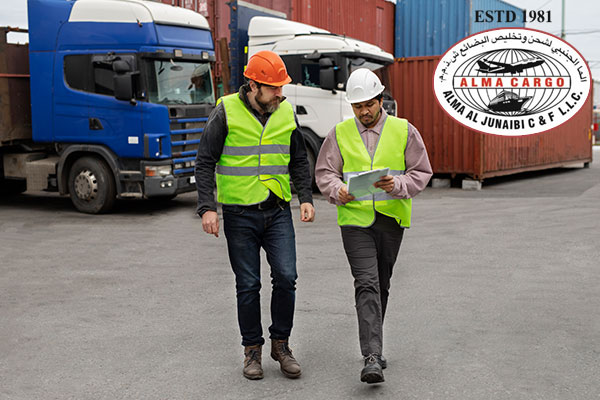
The customs clearance process is the mandatory procedure for moving goods across international borders, involving submitting documentation (invoices, Bills of Lading, Certificates of Origin), declaring goods, getting assessed for and paying duties/taxes, and passing inspections to ensure compliance with a country’s laws before final release for delivery.
Dubai is one of the trading powerhouses in the world and thus a key platform in global trading. It has a strategic location, well-developed infrastructure, and favourable policies for corporations in the world.
This ecosystem has its core structure in a practice called custom clearance Dubai, which is a process in which the legal movement of goods within and out of the emirate is handled. This system is crucial in international trade where businesses need to be efficient, comply with business and cost control.
Determining The Customs Framework Of Dubai
The customs system in Dubai has been put together to create a balance between facilitation and control of the trade. The Dubai customs authority controls every import, export, and transit activity that is kept compliant with the laws of the UAE and international trade requirements.
This framework is backed by several government agencies in the form of regulating tariffs, licensing of particular goods, and enforcing compliance in particular sectors. Collectively, these institutions position Dubai as a secure dual gateway to trade across the world, as well as having strong regulatory control.
What Does Customs Clearance Mean In The Real World
Customs clearance is the official procedure of presenting goods to the customs authorities for approval prior to the importation or export of the goods. This is digitalised, organised, and highly monitored in Dubai. It demands that one make the right disclosures, value goods correctly, and pay the relevant duties and taxes.
Noncompliance may either lead to delays in shipment, fines, or goods confiscation. It is due to this reason that a clear concept of customs requirements is crucial to businesses conducting business in or via Dubai.
Getting Ahead Of Goods
The effective process of clearance of goods at the customs level starts long before a consignment arrives in Dubai. Pre-arrival preparation is a way of making sure that there is full and error-free documentation that will result in fewer inspections or stalling.
Companies should make sure that invoices are clear enough to specify the goods, have the right value, and have the same shipping documents.
The early evaluation of shipments by Dubai Customs can be achieved by submitting the declarations in advance using the digital systems of the service. Such a proactive method tends to accelerate the process of clearance and make business plan logistics more efficient.

Key Documentation At Dubai Customs
The customs process is supported by documentation. A commercial invoice starts with the value and nature of the transaction of the goods. The shipment and contract of carriage are shown in the form of the bill of loading or airway bill.
The certificates of origin validate the origin of products, which has an impact on the payment of duties and the benefits of trade agreements. The collaboration with old school clearing agents in UAE also allows efficiency and compliance, which makes life easier to get one of the most versatile trade gates in the world.
- Freight Forwarding
- Warehousing & Distribution
- Clearing & Forwarding
- Import Export Services
- Packing & Moving Services
- Customs Clearance
- Import Code Services
- Air Freight
- Door to Door Services
- Ocean Freight
- Land Transport
- Cargo Storage
- Relocation Services
- Customs Clearance
- Logistics and Distribution
- Shipping & Logistics
Registration At The Dubai Customs
Any business that engages in importation or exportation processes is registered with the Dubai Customs. These include the formation of a customs account and the acquisition of a business code, which is associated with the trade licence of the company.
Registration is exempt from online declaration systems, and all the transactions are traceable. This is especially necessary for enterprises that conduct ordinary trade since it is the basis of harmonious and non-violent customs activities.
Import Procedures In Dubai
There is a sequence of importing in Dubai. Upon arrival of goods, the importer then makes an electronic declaration and accompanies it with the supporting documents. Typically, customs can carry out inspections using risk evaluation criteria. Goods are delivered after payment of duties and taxes.
This process can be derailed by some challenges, which include misclassification or under-declaration. Those businesses that take time to learn tariff codes and valuation regulations are better placed to avoid the needless expenditures and delays.
Exporting Goods From Dubai
Export procedures are structured and rely on outbound compliance. Exporters are required to make declarations, provide good documentation, and comply with destination country requirements.
The city of Dubai has efficient export systems that facilitate quick clearance, rendering it a good base to re-export to other regions in the Middle East, Africa, and Asia.
Prohibited Goods and Limited Goods
The state of Dubai has stringent regulations on some types of products. Products like drugs, guns, and cultural artefacts may have to undergo special permission. Wholly restricted commodities are drugs, fake goods, and substances that are considered to be harmful to societal ethics.
The Position Of Clearing Professionals
Managing the customs regulations can be tricky, especially for new entrants to the UAE market. Here, the role of clearing agents in UAE is becoming very important. These experts handle statements, communicate with the government, and guarantee the operations of businesses in terms of regulation.
Online Revolution And Intelligent Customs Services
Dubai Customs has also invested a lot in digital platforms to make its operations more efficient and transparent. Paperwork and processing time have been greatly lowered by online declaration systems, mobile applications, and electronic payment portals.
Compliance, Risk Management, and Recent Updates
To ensure long-term success, it is important to be compliant. Some of these common breaches are wrong documentation and misclassification of goods, which are punishable. Through internal controls that keep the businesses in tune with alterations in regulations, the businesses will be well placed to deal with risk.
About Author
Based on the long history of service performance over the years, as far back as 1993, you will get expert knowledge on effective logistics, new freight technology, and best practices in the industry that direct the global trade.
Their experience benefits experienced individuals as well as an expanding company that would like to simplify its operations in shipping between the UAE and other parts of the world.
Conclusion
Learning how to be a customs clearance Dubai will take learning, training, and adjustment. Based on the knowledge of documentation requirements to capitalise on digital systems and professional support, business approaches that are strategic towards an approach to customs achieve a competitive edge.